

Introduction
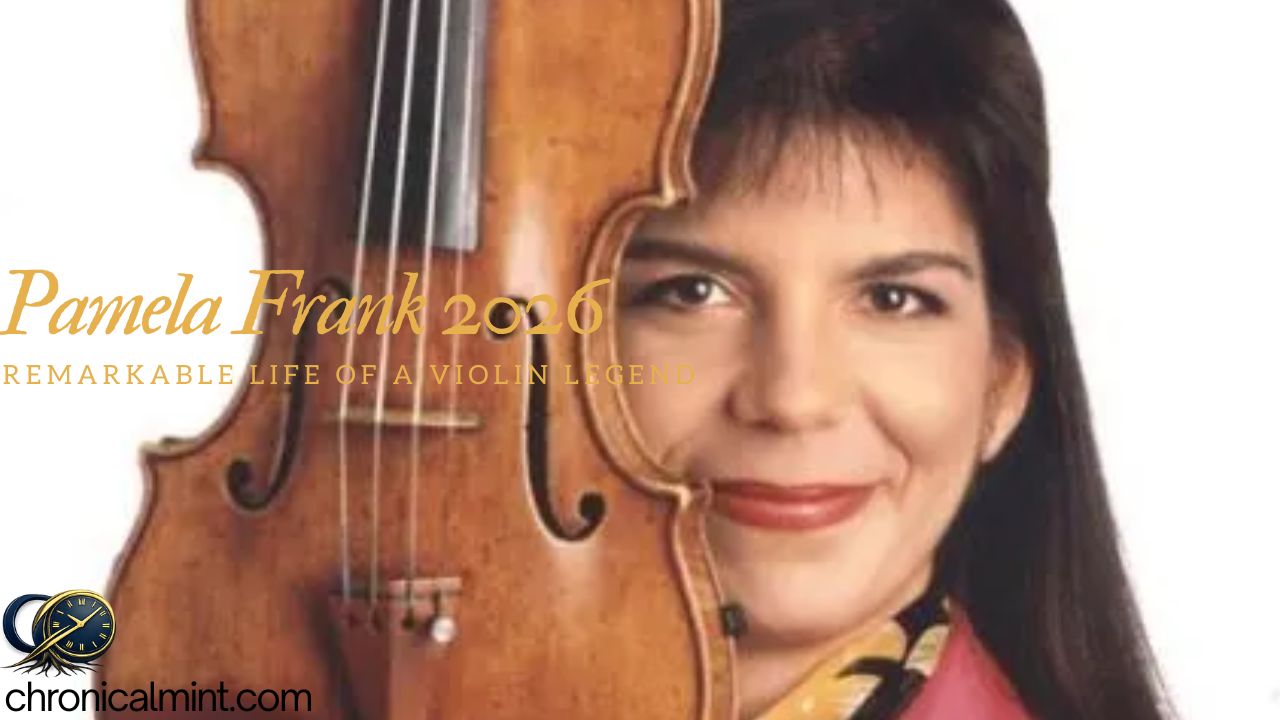
Pamela Frank has spent nearly four decades proving that classical music still has room for fresh voices and lasting artistry. Born in New York City in 1967 to two accomplished pianists, she grew up surrounded by music long before she ever picked up a bow. That early exposure planted the seeds for a career that would eventually take her to the world’s most demanding concert stages. Today, she’s recognized as one of America’s finest violinists, celebrated equally for her solo performances, her work as a chamber musician, and her dedication to teaching the next generation.
Her path hasn’t been simple or predictable. It’s been shaped by rigorous training, a serious health setback that threatened to end her playing career entirely, and a deep, ongoing commitment to mentoring young talent. From Carnegie Hall debuts to faculty positions at some of the country’s top conservatories, Frank’s story offers a rare look at what sustained excellence actually looks like over a lifetime.
This guide walks through her full journey, covering everything from her earliest violin lessons to her current role shaping the future of classical performance. Anyone curious about her career, her recordings, or her influence on modern violin training will find the complete picture here.
Who Is Pamela Frank?
Pamela Frank is an American violinist and music professor born on June 20, 1967, in New York City. She’s built a career that spans nearly four decades, and she shows no signs of slowing down. As a classical violinist, she has performed with nearly every major orchestra in the world. Her reputation as a concert violinist rests on two pillars: dazzling technical skill and deep musical feeling.
Read more:/damien-leake/
But Frank isn’t just a soloist. She’s also a respected chamber musician, a sought-after recitalist, and a dedicated pedagogue. Today, she holds the Herbert R. and Evelyn Axelrod Chair in Violin Studies at the Curtis Institute of Music, where she has taught since 1996. She also serves as adjunct professor at the University of Southern California‘s Thornton School of Music, a post she’s held since 2018. Few violinists manage to balance performing and teaching this well. Frank does both with grace.
Personal Information
| Field | Details |
|---|---|
| Full Name | Pamela Frank |
| Nickname | Pamela Frank |
| Gender | Female |
| Date of Birth | June 20, 1967 |
| Age | 59 (as of 2026) |
| Birthplace | New York City, New York, USA |
| Hometown | New York City |
| Current Residence | New York City area |
| Nationality | American |
| Education / Qualification | Curtis Institute of Music (graduated 1989) |
| Profession | Classical violinist, music professor |
| Languages Spoken | English (others not confirmed) |
| Hobbies & Interests | Chamber music, teaching, musician wellness advocacy |
| Marital Status | Married |
| Spouse / Partner | Andy (Alexander) Simionescu, violinist |
| Father’s Name | Claude Frank |
| Mother’s Name | Lilian Kallir |
Personal Information
Full Name
Her full name is Pamela Frank.
She is a well-known American violinist.
Nickname
No public nickname is on record.
She goes by her full name, Pamela Frank.
Gender
Pamela Frank is female.
She has built her career as a woman in classical music.
Date of Birth
She was born on June 20, 1967.
This makes her a summer-born artist from New York.
Age
As of 2026, she is 59 years old.
She remains active in performing and teaching at this age.
Birthplace
Pamela Frank was born in New York City.
This city shaped much of her early musical life.
Hometown
New York City is her hometown.
She grew up there in a household full of music.
Current Residence
She still lives in the New York City area.
This has remained her home base for decades.
Nationality
Pamela Frank holds American nationality.
She was born and raised in the United States.
Education / Qualification
She graduated from the Curtis Institute of Music.
She completed her studies there in 1989.
Profession
She works as a classical violinist.
She is also a respected music professor.
Languages Spoken
English is her primary language.
Other languages spoken are not publicly confirmed.
Hobbies & Interests
She is passionate about chamber music and teaching.
She also supports musician wellness through her injury prevention work.
Marital Status
Pamela Frank is currently married.
She shares her life with her husband in New York.
Spouse / Partner
Her husband is Andy Simionescu, a violinist.
They both share a strong connection to classical music.
Father’s Name
Her father was Claude Frank.
He was a well-known concert pianist.
Mother’s Name
Her mother was Lilian Kallir.
She was also an accomplished pianist.
Physical Appearance
Height (Feet/Inches)
Pamela Frank is 5 feet 6 inches tall.
Height (cm)
Pamela Frank’s height is 168 cm.
Weight (kg)
She has weight of 66 kg.
Weight (lbs)
Her weight is 146 lbs.
Eye Color
Pamela Frank has dark brown eyes.
Hair Color
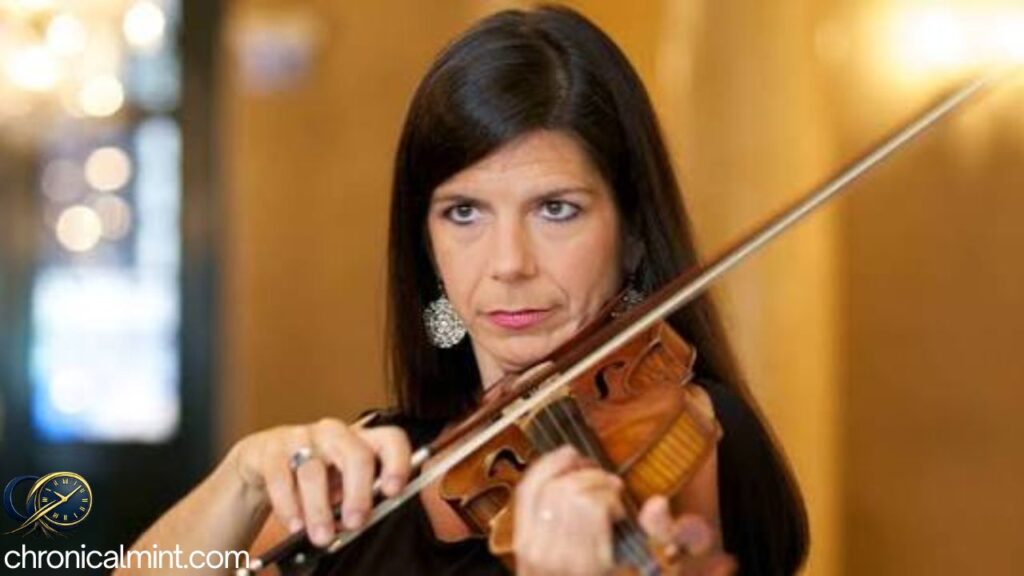
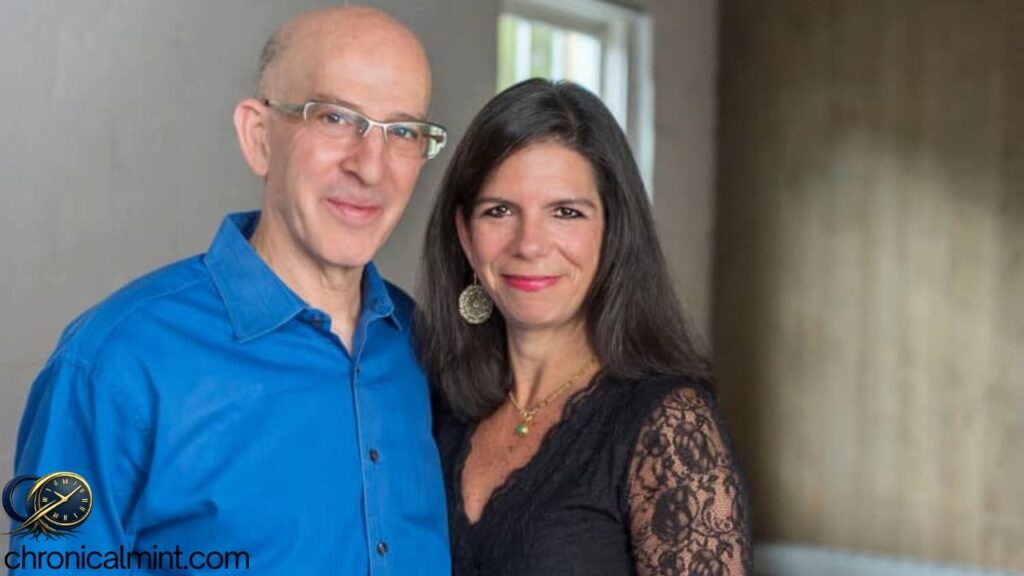
She has dark brown hair. The hair appears to be long, straight, and naturally dark.
Body Type
Pamela Frank has an average body type.
Skin Tone
She has a fair to light skin tone.
Shoe Size
Pamela Frank’s shoe size is approximately US 7.5–8.5 (EU 38–39).
Piercings
She has ear piercings and is wearing earrings all time.
Distinctive Features
The person has long straight dark brown hair, expressive dark brown eyes, and defined facial features. They also have an elegant appearance and a focused expression while performing the violin.
Early Life and Family Background
Growing up with two working musicians for parents shaped everything about Frank’s path. Her father, Claude Frank, and her mother, Lilian Kallir, were both accomplished pianists. Music filled their New York City home every single day. Young Pamela didn’t realize at first that her parents were building careers. To her, playing music simply looked like fun.
That early exposure mattered. Kids raised around working artists often absorb musical instinct before they ever pick up an instrument. Frank started violin lessons at just five years old. Nobody pushed her into a rigid, formal method like Suzuki, which many of her peers followed. Instead, her training took a more personal, individualized shape from the very start. This unusual foundation gave her room to develop her own musical voice early. It’s a detail that separates her origin story from many other classical violinist biographies you’ll read online, and it explains why her playing later stood out as distinctly her own.
Physical Appearance
| Field | Details |
|---|---|
| Height (Feet/Inches) | 5 ft 6 in (168 cm) |
| Height (cm) | 168 cm |
| Weight (kg) | 60–66 kg |
| Weight (lbs) | 132–146 lbs |
| Eye Color | Dark Brown |
| Hair Color | Dark Brown |
| Body Type | Average |
| Skin Tone | Fair to Light |
| Shoe Size | US 7.5–8.5 (EU 38–39) |
| Piercings | Ear piercings |
| Distinctive Features | Long straight dark brown hair, expressive dark brown eyes, defined facial features, oval face, and a focused, elegant appearance while performing the violin. |
Musical Education and Training
Frank’s formal training began with Shirley Givens, a respected violin teacher known for her gentle, student-centered approach. Frank studied under Givens for eleven straight years. That’s an unusually long apprenticeship, and it built rock-solid technical fundamentals. Most young violinists switch teachers far more often. Frank’s stability with one mentor for over a decade gave her playing a consistent, well-rooted foundation.
After leaving Givens, she moved on to study with two towering figures: Szymon Goldberg and Jaime Laredo. Both men were internationally recognized violinists and teachers in their own right. Their guidance sharpened her interpretive skills and pushed her toward professional-level artistry. Her education culminated at the Curtis Institute of Music in Philadelphia, where her father also taught. She graduated in 1989, one year after winning the Avery Fisher Career Grant in 1988. This sequence of mentors, from Givens to Goldberg to Laredo to Curtis, reads like a checklist of the best violin faculty training America had to offer at the time.
Rise to Prominence as a Violinist
Every career needs a starting point, and Frank’s came in 1985. That year, she made her first appearance with Alexander Schneider and the New York String Orchestra at Carnegie Hall. It wasn’t a one-off. She went on to perform with Schneider’s ensemble three more times, cementing her presence on one of the world’s most famous stages while still in her late teens.
Recognition followed quickly. In 1988, she received the Avery Fisher Career Grant, a prestigious honor given to promising young American instrumentalists. She graduated from Curtis in 1989 and stepped straight into a demanding international schedule. Within just a few years, she was performing as a soloist with the New York Philharmonic, appearing at major festivals, and building a name well beyond student circles. Few young violinists transition this smoothly from conservatory graduate to international soloist. Frank’s rapid rise reflected both talent and relentless preparation behind the scenes.
Career Highlights and Major Performances
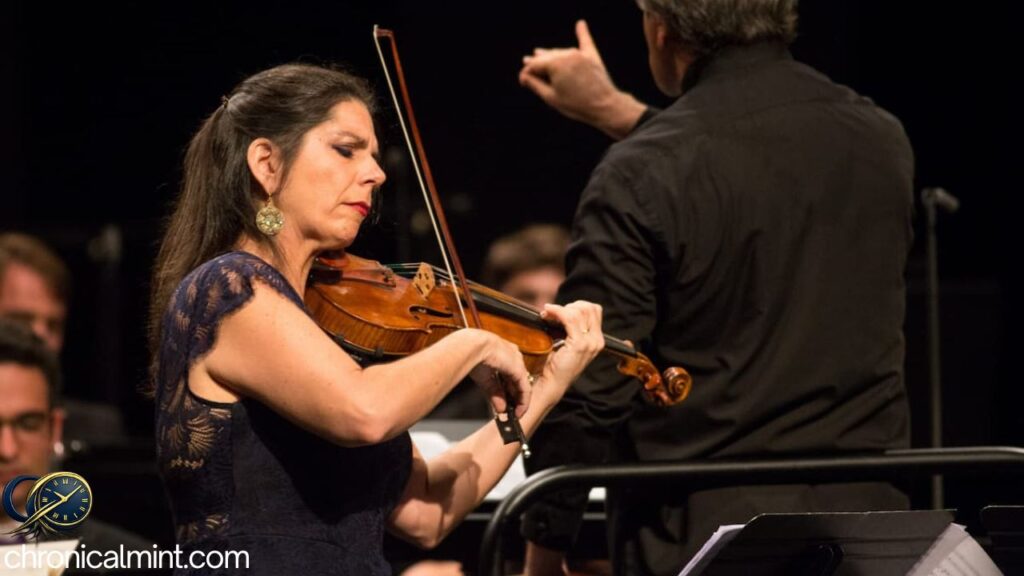
Frank’s résumé reads like a map of the world’s top concert halls. She has performed as orchestral soloist with the New York Philharmonic, the Berlin Philharmonic, the Chicago Symphony Orchestra, the Cleveland Orchestra, the Boston Symphony Orchestra, and the San Francisco Symphony. Add to that the Zurich Tonhalle Orchestra, the Czech Philharmonic, the Israel Philharmonic, the St. Petersburg Philharmonic, and the Academy of St. Martin in the Fields. That’s an extraordinary spread across three continents.
She’s played under legendary conductors too, including Daniel Barenboim, Christoph von Dohnányi, Seiji Ozawa, and David Zinman. Festival appearances tell a similar story of range and demand. She’s performed at Tanglewood, Ravinia, Verbier Festival, Aldeburgh, Salzburg, and the Marlboro Music Festival. Below is a quick snapshot of her major orchestral relationships.
| Orchestra | Region |
|---|---|
| New York Philharmonic | United States |
| Berlin Philharmonic | Germany |
| Chicago Symphony Orchestra | United States |
| Zurich Tonhalle Orchestra | Switzerland |
| St. Petersburg Philharmonic | Russia |
Her Carnegie Hall recital debut came in April 1995, followed by an acclaimed Beethoven sonata cycle with Claude Frank at London’s Wigmore Hall in December 1997.
Notable Collaborations and Chamber Music Work
Solo performing tells only half of Frank’s story. She’s equally celebrated as a chamber musician, and her list of partners reads like a who’s who of classical music. She has toured and recorded extensively with cellist Yo-Yo Ma, pianist Peter Serkin, and pianist Emanuel Ax. Perhaps most touching is her long partnership with her own father, Claude Frank, with whom she performed the violin sonata repertory for decades. Few father-daughter duos have left this kind of mark on American classical music.
Her chamber work extended into mentorship, too. She took part in the Marlboro Music Festival in Vermont, an institution famous for pairing young talent with seasoned masters. She also joined chamber seminars led by the late Isaac Stern at Carnegie Hall and the Jerusalem Music Centre in Jerusalem. Frank hasn’t limited herself to standard repertoire, either. She’s premiered contemporary works by composers like Aaron Jay Kernis, and in 1997 she joined Serkin, Ma, and clarinetist Richard Stoltzman in Tokyo to perform pieces by Japanese composer Toru Takemitsu. That willingness to explore new music alongside old favorites sets her apart from many peers who stick strictly to the canon.
Discography and Recordings
Frank’s discography spans several major labels and decades of recordings. On Decca Records, she recorded the Dvořák Violin Concerto with the Czech Philharmonic and the complete Brahms Violin Sonatas with Peter Serkin. For Sony Classical, she recorded the Chopin Piano Trio with Emanuel Ax and Yo-Yo Ma, plus Schubert’s beloved “Trout” Quintet. She’s also featured on the soundtrack to the film Immortal Beloved.
Her work with Arte Nova produced two standout projects: the complete Mozart Violin Concertos with conductor David Zinman and the Tonhalle Orchestra, and a Schubert album recorded alongside her father. On MusicMasters, she completed the full Beethoven sonata cycle, again performing with Claude Frank. That set later became available as a complete three-disc collection. Additional recordings appear on Naxos Records and Hänssler Classics, rounding out a catalog that few active violinists can match in both size and variety.
| Label | Notable Recording |
|---|---|
| Decca Records | Brahms Violin Sonatas with Peter Serkin |
| Sony Classical | Schubert “Trout” Quintet |
| Arte Nova | Mozart Violin Concertos with David Zinman |
| MusicMasters | Complete Beethoven sonata cycle |
| Naxos Records | Zwilich Violin Concerto |
Awards, Honors, and Recognition
No discussion of Frank’s career is complete without the Avery Fisher Prize. She received this honor in 1999, and it remains one of the highest awards given to American instrumentalists. Only a small handful of musicians earn it each decade, which makes the recognition especially meaningful. It confirmed what audiences already knew: Frank belonged among the top tier of American classical performers.
Before that came the Avery Fisher Career Grant in 1988, awarded while she was still finishing her studies at Curtis. This early grant helped launch her toward the international stage. Together, these two honors bookend a career built on steady, sustained excellence rather than a single lucky break. It’s worth noting how rare it is for one artist to collect both the Career Grant and the full Prize. That combination places Frank in a select group of musicians recognized at both the beginning and the peak of their professional journey.
Teaching Career and Academic Positions
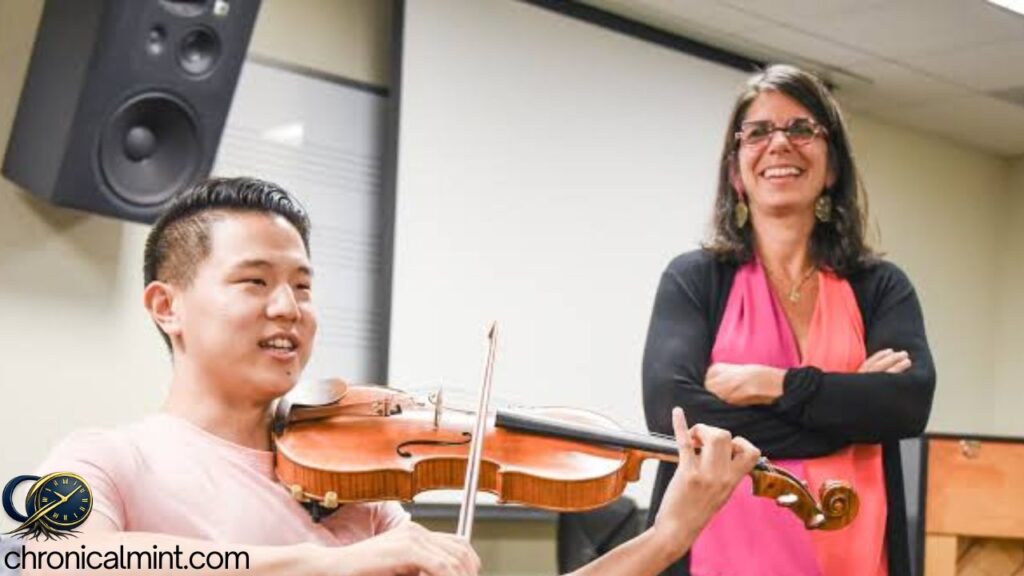
Teaching has become just as central to Frank’s identity as performing. She holds the Herbert R. and Evelyn Axelrod Chair in Violin Studies at the Curtis Institute of Music, a role she has held since 1996. She also teaches at the Peabody Institute of Johns Hopkins University and at the State University of New York at Stony Brook. Since 2018, she’s served as adjunct professor at USC‘s Thornton School of Music.
Beyond her academic posts, Frank runs master classes and coaching sessions every year at Tanglewood, Ravinia, and Verbier Festival. These intensive sessions let young violinists work directly with a performer of her caliber, something few conservatory programs can offer in-house. From 2008 to 2024, she also served as Artistic Director of the Evnin Rising Stars, a mentoring program for young artists at the Caramoor Center for the Arts. Her role there gave dozens of emerging musicians early exposure to professional-level coaching and performance opportunities.
Role in the Premio Paganini / Genoa Violin Competition
Frank’s influence reaches well beyond her own students. She’s a regular presence on international competition juries, including a leadership role tied to the Premio Paganini in Genoa. This competition ranks among the most prestigious violin contests in the world, drawing top young talent from across the globe every year it runs.
Her connection to Genoa places her alongside a long line of respected adjudicators who’ve shaped the careers of rising violinists through this event. The 59th International Violin Competition, part of the Premio Paganini series, is scheduled to take place in Genoa from October 11 to 24, 2027. Competitions like this one matter more than casual fans might realize. They don’t just crown a winner. They launch careers, open doors to major management agencies, and signal to orchestras worldwide which young players deserve attention. Frank’s involvement lends serious credibility to the judging process, given her own decades of performing and teaching experience.
Musical Style and Artistic Approach
What makes Frank’s playing instantly recognizable? It’s the balance. She never sacrifices emotional depth for technical flash, and she never lets sentiment blur precision. Critics often praise her interpretations for combining warmth with clarity, a combination that’s harder to pull off than it sounds. Many violinists lean one way or the other. Frank manages both at once, which explains why conductors keep inviting her back season after season.
Her artistic approach also embraces range. She’s just as comfortable performing Mozart and Beethoven as she is tackling brand-new commissioned works. That flexibility comes from genuine curiosity, not obligation. She actively sought out composers like Aaron Jay Kernis and premiered pieces written specifically for her voice on the instrument. This dual commitment, honoring tradition while championing new music, has kept her playing feel fresh across four decades. It’s a rare quality, and it’s part of why younger musicians still study her recordings closely today.
Health Journey and Career Resilience
Frank’s career hit a serious obstacle in 2012. A painful injury in her neck and shoulder began causing numbness in her hand, threatening to end her ability to play entirely. Doctors initially recommended neck fusion surgery, a drastic and risky option. Instead, she pursued a less invasive path through physical therapy, working closely with therapist Howard Nelson to identify the root causes of her pain.
Nelson traced the problem to everyday habits, things like how she held her head while walking or slept at night. Correcting these small, ingrained patterns took nearly two years of dedicated work. Eventually, Frank returned fully to performing. The experience left such an impression that she and Nelson later co-founded Fit as a Fiddle Inc., a venture focused on injury prevention and musician wellness. Through this initiative, they teach musicians how daily posture and movement habits can either protect or damage a performing career. It’s a message Frank now shares with the same passion she brings to the concert stage, turning a personal setback into a resource for musicians everywhere.
Personal Life
Away from the concert hall, Frank keeps her personal life fairly private, though a few details are well documented. She was born and raised in New York City and continues to make her home in the New York area today. She is the daughter of two celebrated musicians, Claude Frank and Lilian Kallir, whose influence shaped her earliest years and continued to inform her artistic choices well into adulthood.
Frank is married to violinist Andy Simionescu, and the couple lives together in the New York City area. Music runs through nearly every part of her personal world, from her upbringing to her marriage to her ongoing collaborations with family and colleagues alike. Despite decades in the public eye, she’s managed to keep her private life relatively low-key, letting her performances and teaching speak for themselves rather than courting attention off the stage.
Legacy and Influence on Violin Pedagogy
Frank’s impact on the next generation of violinists is hard to overstate. Through her faculty roles at the Curtis Institute of Music, Peabody Institute, and Stony Brook, she’s trained countless students who’ve gone on to their own professional careers. Her approach to coaching blends technical rigor with the same emotional honesty that defines her own playing, giving students a model worth emulating rather than just imitating.
Her influence also extends through competition judging, festival master classes, and mentorship programs like the Evnin Rising Stars. Each of these platforms has let her shape young talent well beyond her own private studio. Add to that her public advocacy for injury prevention through Fit as a Fiddle Inc., and you get a legacy that covers performance, pedagogy, and musician health all at once. Few artists manage to influence a field on that many fronts simultaneously. Frank’s fingerprints are visible across American classical music, from concert programming to conservatory training to how musicians protect their bodies over long careers.
Frequently Asked Questions About Pamela Frank
Is Pamela Frank still teaching in 2026?
Yes. She continues to hold her faculty position at the Curtis Institute of Music and remains active as adjunct professor at USC‘s Thornton School of Music.
What awards has Pamela Frank won?
Her top honors include the Avery Fisher Prize in 1999 and the Avery Fisher Career Grant in 1988.
Who are Pamela Frank’s parents?
Her parents are pianists Claude Frank and Lilian Kallir, both respected performers in their own right.
What is Pamela Frank’s connection to the Premio Paganini?
She serves as a jury figure connected to the competition held in Genoa, with the 59th edition scheduled for October 2027.
What happened with Pamela Frank’s injury?
A serious neck and shoulder injury in 2012 nearly ended her career. She recovered through physical therapy and later co-founded Fit as a Fiddle Inc.
Who is Pamela Frank?
Pamela Frank is an American violinist born on June 20, 1967, in New York City. She’s the daughter of pianists Claude Frank and Lilian Kallir.
What are some famous Pamela Frank recordings?
Notable releases include the complete Mozart Violin Concertos with David Zinman on Arte Nova, the Beethoven sonata cycle with her father Claude Frank on MusicMasters, the Brahms Violin Sonatas with Peter Serkin on Decca, and Schubert’s “Trout” Quintet on Sony Classical. She’s also featured on the soundtrack to Immortal Beloved.
What kind of music does Pamela Frank perform?
Pamela Frank performs a wide range of classical repertoire, from standard works by Mozart, Beethoven, and Brahms to contemporary compositions.
Conclusion
Pamela Frank‘s biography and career tells a story of consistency, resilience, and quiet reinvention. From her early Carnegie Hall appearances to her decades-long presence on faculty at the Curtis Institute of Music, she’s built a legacy that touches nearly every corner of American classical music. Her recordings continue to influence how young violinists approach the standard repertoire, while her recovery from a career-threatening injury reshaped how the industry talks about musician wellness.
Few artists manage to excel as performer, teacher, and advocate all at once, yet Frank has done exactly that across a career spanning nearly forty years.Her ongoing work with students, competition juries, and health initiatives like Fit as a Fiddle Inc. shows no signs of slowing down. As classical music continues evolving, Frank’s blend of technical mastery and genuine mentorship offers a model worth studying. Her story isn’t finished, and that’s precisely what makes it worth following.